Back To Top Click Here to Follow Sixpenceee on Instagram

"/>
1 2 3 4 5 6 7 8 9 10 »
    
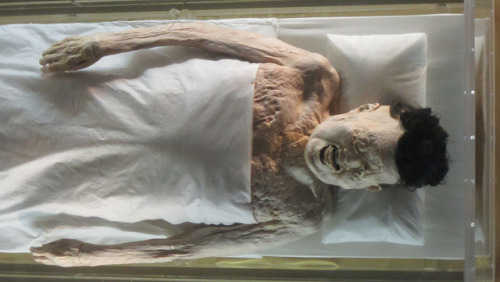
 Lady of DaiWhen talking about body preservation and mummies, people all over the world think of Egypt and the mummified bodies of Pharaohs, such as Tutankhamun. But how many know that the world’s best preserved bodies actually come from China?  The Lady of Dai, otherwise known as The Diva Mummy, is a 2,100-year-old mummy from the Western Han Dynasty and the best preserved ancient human ever found. Just how this incredible level of preservation was accomplished has baffled and amazed scientists around the world.(Source)

Lady of Dai

When talking about body preservation and mummies, people all over the world think of Egypt and the mummified bodies of Pharaohs, such as Tutankhamun. But how many know that the world’s best preserved bodies actually come from China?  The Lady of Dai, otherwise known as The Diva Mummy, is a 2,100-year-old mummy from the Western Han Dynasty and the best preserved ancient human ever found. Just how this incredible level of preservation was accomplished has baffled and amazed scientists around the world.

(Source)
11 May ♥ 1,923 notes – reblog
# science# creepy# world
    
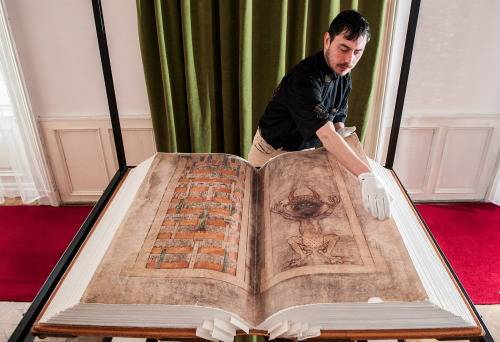
The Codex GigasCodex Gigas, otherwise known as the Devil’s Bible is the largest and probably one of the strangest manuscripts in the world.  It is so large that it is said to have taken more than 160 animal skins to make it and takes at least two people to lift it. According to legend, the medieval manuscript was made out of a pact with the devil, which is why it is sometimes referred to as the Devil’s Bible. It was written in Latin during the 13th century AD, and although the origin of the manuscript is unknown, a note in the manuscript states that it was pawned in the monastery at Sedlec in 1295. Stories and legends say that the Codex Gigas brought disaster or illness on whoever possessed it during its history. (More Information)

The Codex Gigas

Codex Gigas, otherwise known as the Devil’s Bible is the largest and probably one of the strangest manuscripts in the world.  It is so large that it is said to have taken more than 160 animal skins to make it and takes at least two people to lift it. According to legend, the medieval manuscript was made out of a pact with the devil, which is why it is sometimes referred to as the Devil’s Bible. 

It was written in Latin during the 13th century AD, and although the origin of the manuscript is unknown, a note in the manuscript states that it was pawned in the monastery at Sedlec in 1295. Stories and legends say that the Codex Gigas brought disaster or illness on whoever possessed it during its history. (More Information) 

9 May ♥ 7,025 notes – reblog
# world# creepy
    

The Man Who Laughs is a 1928 American silent film directed by the German Expressionist filmmaker Paul Leni. It’s about a man named Gwynplaine. His father was a nobleman. Orphaned as a child, he is captured by outlaws who use a knife to carve his face into a hideous grin. It’s considered a melodrama with roots in horror. You can watch it here

Here is my masterpost of short creepy films

9 May ♥ 16,162 notes – reblog
# creepy# short films
    

Sculptures by Noe Serrano

Noe Serrano is Spanish sculptor who is part of a generation of artists interested in sculptural hyper-realism inspired by the special effects industry and a grotesque sensibility.

9 May ♥ 2,805 notes – reblog
# creepy# art
    

The Cat With Hands is another short horror film I’d recommend. It’s a dark, surreal story of a cat who wants to be human. You can watch it here

9 May ♥ 2,316 notes – reblog
# creepy
    

This is a mushroom called “Devil’s Finger” 

(Source)

29 Apr ♥ 6,094 notes – reblog
# creepy# b
    

Frankenmouse!

Remember this little mouse with the ear on top? Creatively dubbed “earmouse,” this little guy was originally held up as evidence that genetic engineering had gone too far. In reality, a better name for him may have been frankenmouse—he’s the product of simple stitching, not genetic engineering. Earmouse’s creators molded sterile, biodegradable mesh into the shape of a human ear, which they seeded with bovine cartilage cells. To grow the ear, they needed a power source, so they stitched the ear-shaped scaffold onto a nude mouse (pictured above), a mouse with no immune system. Once it was stitched on, the mouse’s own blood vessels infiltrated the scaffold, nourishing the incipient ear. By the time the scaffold dissolved, the ear was sturdy enough to stand on its own—and thoroughly creeped everyone out.

(Source)

28 Apr ♥ 1,551 notes – reblog
# science# b# creepy
    

This is a 1999 work by artist Fritz Scholder entitled Future Clone. It is located in the Customs House (NY). This statue was featured in the Black Swan.

(Source)

27 Apr ♥ 5,138 notes – reblog
# creepy# b