Developing Penguin
Thanks to ultrasound, we can see through the eggshell of this emperor penguin chick. It’s floating in egg fluid, just days from hatching time. Soon it will enter into one of the coldest environments on the planet, protected by a set of down which, as you can see, has already developed inside the egg. Attached to the belly is the last of the egg yoke. (Source)
Developing Elephant
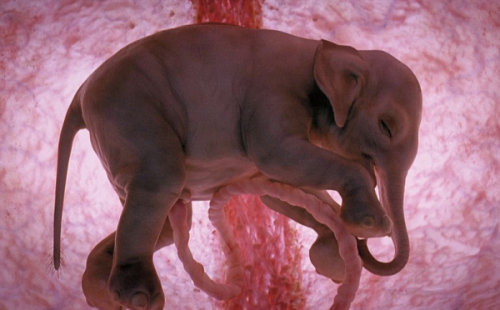
Halfway through its twenty-two month gestation period, this Asian elephant is a perfect miniature of its already-born brethren. Even the tiny trunk has formed, and small hoofs can also be seen. Unlike humans, infant elephants have physical proportions which remain the same into adulthood.
Here is a link to a developing penguin.
The explosive force of
neodymium magnets.
Gif by Sixpenceee. Original obtained video via youtube.
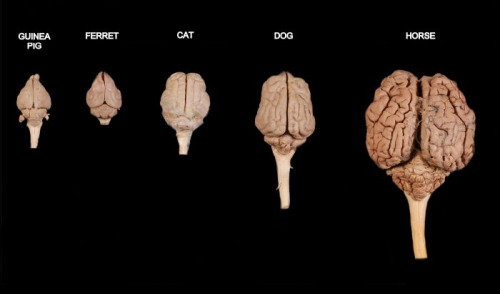
Brain size and shape comparison of different species.
Developing Polar Bears
Two thirds of the way to being born, these polar bears already have their insulating fur, and possess tiny claws. Their tiny ursine bodies are engaged in what resembles a bear hug—but sibling rivalry will inevitably escalate once they are born into what is often a life of great hardship. Polar bear cubs grow into the largest carnivore species on land.
(Source)
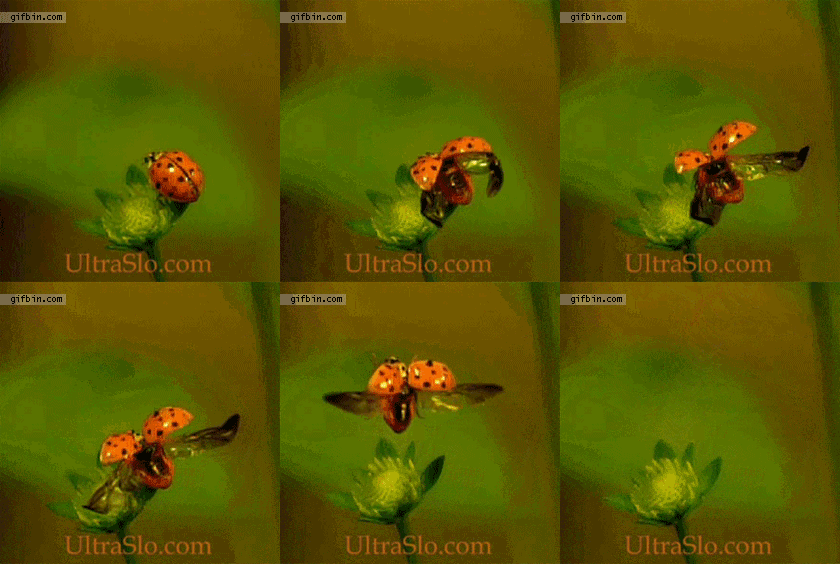
This is how a ladybug flies
(Source)
Chrysopelea (Flying Snake)
Flying snakes flatten their bodies into a concave C shape to trap air as
they fall. By undulating back and forth, they can actually make turns
in the air. They can be found in Southeast Asia and Southernmost China. (Source)

A computer animation of a star being devoured by a black hole
(Source)
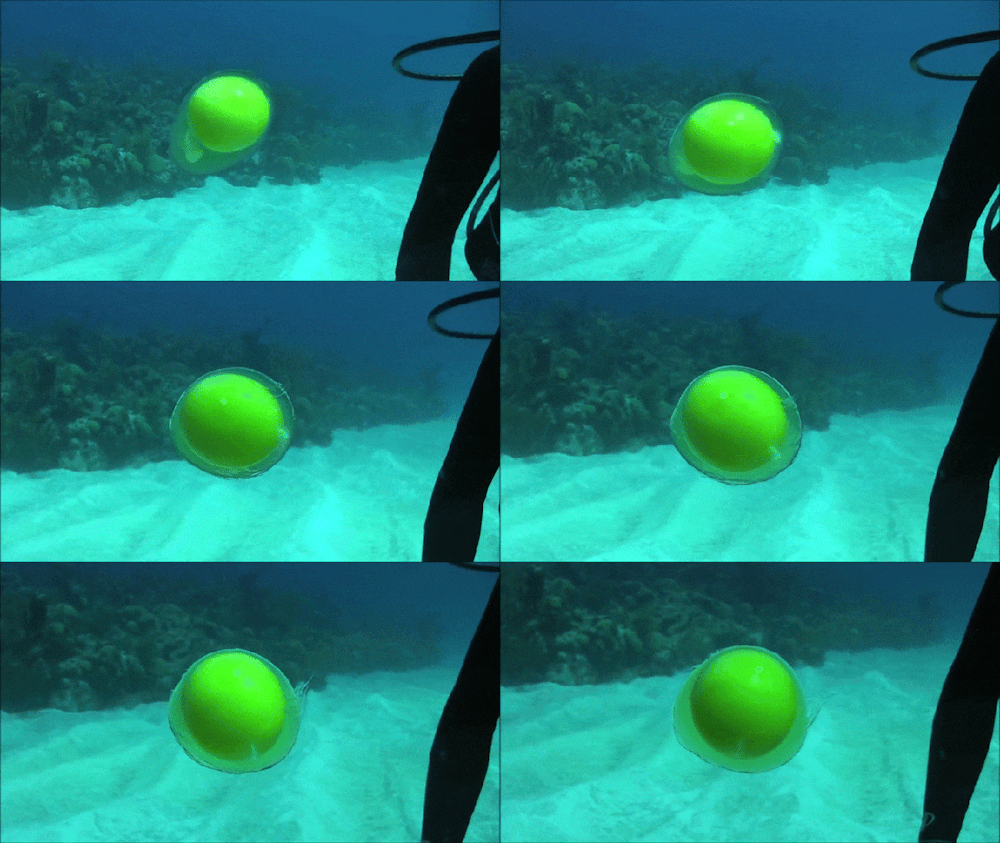
This is what a cracked egg looks like underwater.
(Source)
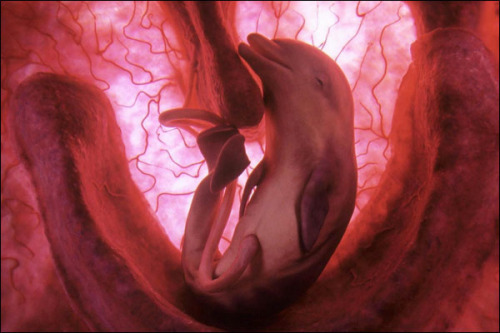
Developing Bottlenose Dolphin
This photo shows a bottlenose dolphin about six months through its gestation period. Bottlenose dolphins can be found wherever the ocean is relatively warm. They give birth after twelve months. Tiny teeth have begun to form inside the mouth of this dolphin fetus, and its tail flukes are beginning to develop.
(Source)
 Welcome to Sixpenceee. You’ll find interesting content that ranges a wide variety of topics but our specialty is in creepy/bizarre/horror/paranormal & science. We don't claim any material here unless otherwise stated. For business purposes please contact us at