Back To Top Click Here to Follow Sixpenceee on Instagram

"/>
1 2 3 4 5 6 7 8 9 10 »
    
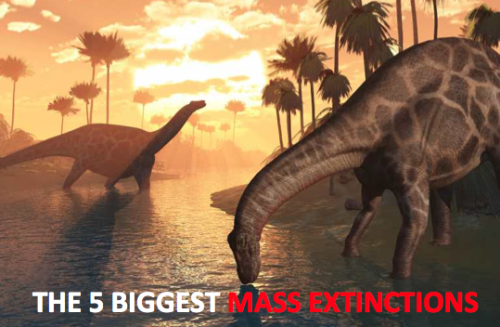
A mass extinction are period on Earth’s history where an abnormally large number of species die out simultaneously or within a limited time period.Here are the 5 biggest:Ordovician-Silurian mass extinction:  During this time most life was in the ocean. Sea creatures like the trilobites, brachiopods and graptolites were wiped out. Almost 85% of them were completely gone. What happened was there was an ice age that caused a climate change. Sea levels fell and the chemistry of the ocean was messed up.Late Devonian mass extinction: This was a series of extinctions over the course of a million years, and not a single event. Life in shallow seas were impacted. Much of the sea bed became devoid of oxygen. Changes in sea level, asteroid impacts climate change have also been blamed for this mass extinction.Permian mass extinction: This mass extinction has been nicknamed the great dying. A staggering 96% of species have died out. All life on Earth today is the surviving 4%. There were at least two separate phases of extinction spread over millions of years. Marine creatures were particularly badly affected and insects suffered the only mass extinction of their history. Many causes have been proposed for the event: asteroid impact, flood basalt eruptions, catastrophic methane release, a drop in oxygen levels etc. Triassic-Jurassic mass extinction: Climate change, flood basalt eruptions and an asteroid impact have all been blamed for loss of life. Many types of animal died out, including lots of marine reptiles, some large amphibians, many reef-building creatures and large numbers of cephalopod molluscs. Roughly half of all the species alive at the time became extinct. Strangely, plants were not so badly affected.Cretaceous- Tertiary mass extinction: This is famed for the death of the dinosaurs. Many other organisms perished however such as flowering plants & ammonites.This extinction was due to flood basalt eruptions affecting the world’s climate, combined with drastic falls in sea level. Then a huge asteroid or comet struck the seabed near the Yucatan Peninsula in Mexico. Many propose that the next big extinction won’t be because of natural disasters but because of man made ones. SOURCE

A mass extinction are period on Earth’s history where an abnormally large number of species die out simultaneously or within a limited time period.

Here are the 5 biggest:

Ordovician-Silurian mass extinction:  During this time most life was in the ocean. Sea creatures like the trilobites, brachiopods and graptolites were wiped out. Almost 85% of them were completely gone. What happened was there was an ice age that caused a climate change. Sea levels fell and the chemistry of the ocean was messed up.

Late Devonian mass extinction: This was a series of extinctions over the course of a million years, and not a single event. Life in shallow seas were impacted. Much of the sea bed became devoid of oxygen. Changes in sea level, asteroid impacts climate change have also been blamed for this mass extinction.

Permian mass extinction: This mass extinction has been nicknamed the great dying. A staggering 96% of species have died out. All life on Earth today is the surviving 4%. There were at least two separate phases of extinction spread over millions of years. Marine creatures were particularly badly affected and insects suffered the only mass extinction of their history. Many causes have been proposed for the event: asteroid impact, flood basalt eruptions, catastrophic methane release, a drop in oxygen levels etc. 

Triassic-Jurassic mass extinction: Climate change, flood basalt eruptions and an asteroid impact have all been blamed for loss of life. Many types of animal died out, including lots of marine reptiles, some large amphibians, many reef-building creatures and large numbers of cephalopod molluscs. Roughly half of all the species alive at the time became extinct. Strangely, plants were not so badly affected.

Cretaceous- Tertiary mass extinction: This is famed for the death of the dinosaurs. Many other organisms perished however such as flowering plants & ammonites.This extinction was due to flood basalt eruptions affecting the world’s climate, combined with drastic falls in sea level. Then a huge asteroid or comet struck the seabed near the Yucatan Peninsula in Mexico. 

Many propose that the next big extinction won’t be because of natural disasters but because of man made ones. 

SOURCE

13 Aug ♥ 2,910 notes
# science

  1. ze-awesome-prussia97 reblogged this from sixpenceee
  2. gibbyisgibby reblogged this from thatoneangrycatlady
  3. thatoneangrycatlady reblogged this from sixpenceee
  4. cutecornball reblogged this from arcticfarts
  5. wilde-desire reblogged this from llamas-for-president
  6. llamas-for-president reblogged this from arcticfarts
  7. arcticfarts reblogged this from sixpenceee
  8. xoyourxoblondexojulietxo reblogged this from sixpenceee
  9. vom1tspit reblogged this from sixpenceee
  10. adventuring-fool reblogged this from sixpenceee
  11. adayinthelifeofsomekidd reblogged this from sixpenceee
  12. thelightsof-myhometown reblogged this from sixpenceee
  13. theofficialassbutt reblogged this from sixpenceee
  14. bootyclaimer reblogged this from sixpenceee
  15. tenshi-manabu-michiya reblogged this from sixpenceee and added:
    Many propose that that next big extinction won’t be because of natural disasters but because of man made ones. I don’t…
  16. meaintnohipster reblogged this from sixpenceee
  17. fenrir-greenflame reblogged this from therianwitch
  18. orbitofthought reblogged this from mounted-archer
  19. mounted-archer reblogged this from sixpenceee
  20. therianwitch reblogged this from sixpenceee
  21. mushr00mprincess reblogged this from sixpenceee
  22. twiztedmind80 reblogged this from sixpenceee